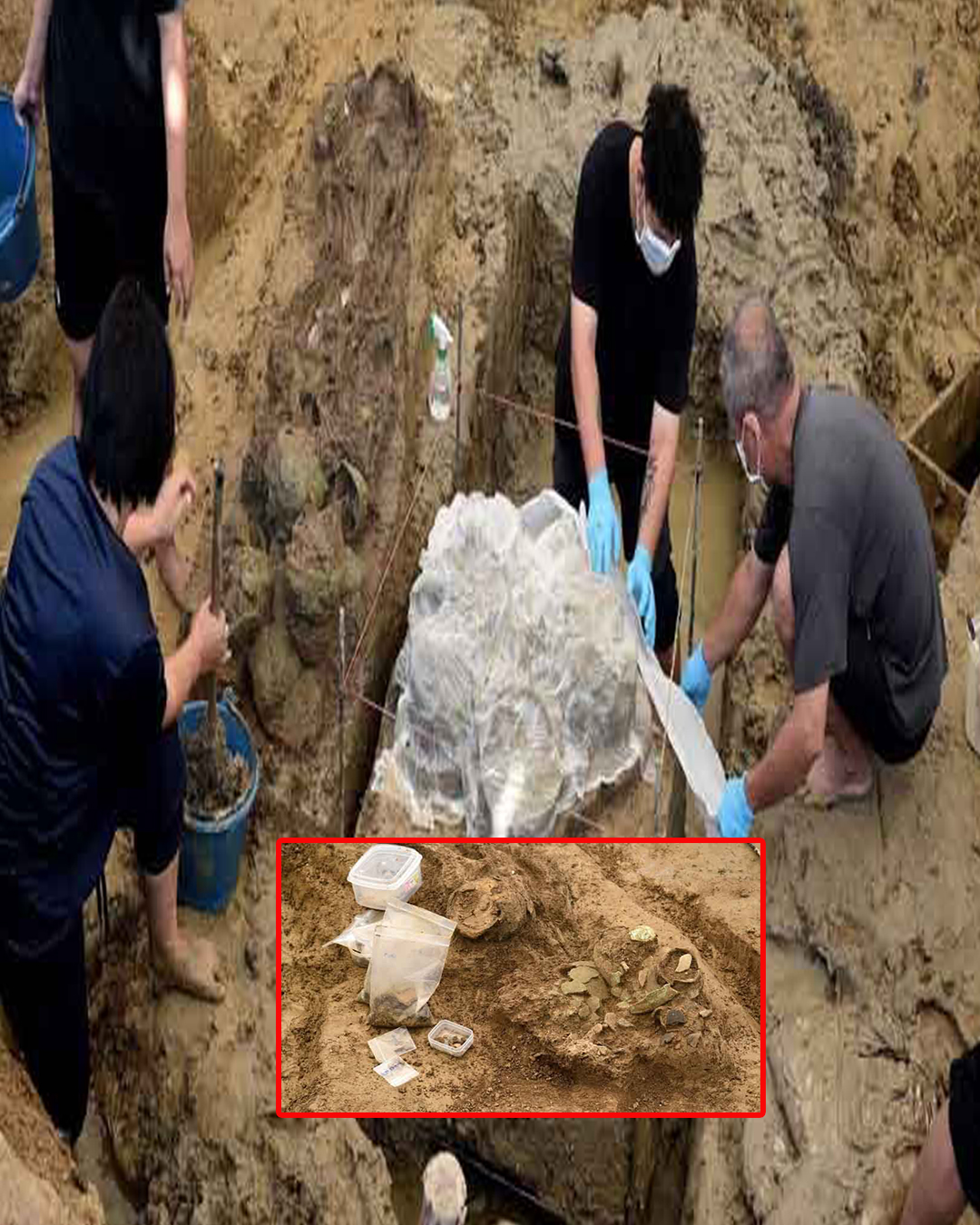
PHETCHABURI — Archaeologists are preparing to lift a soil block weighing more than one tonne to safely remove the skulls of four ancient human skeletons, estimated to be 1,500–2,000 years old, from the Don Yai Thong archaeological site in Phetchaburi province.
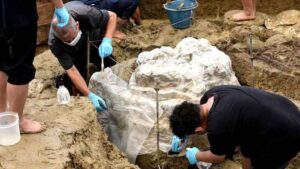
The operation is being carried out by archaeologists from the Fine Arts Office 1 in Ratchaburi, working with conservation scientists from the Office of National Museums under the Fine Arts Department.
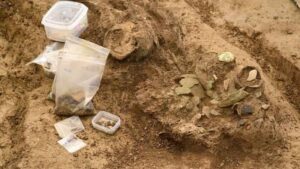
The site has already yielded four bronze drums, animal jawbones believed to belong to cattle or buffalo, and ancient human skeletons. On 2 July 2026, archaeologists also uncovered two gold rings. One bears a Brahmi inscription reading “Pusarakhitasa,” meaning “one protected by the auspicious Pushya star.”
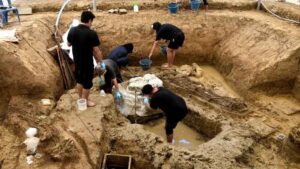
According to Dr Uthen Wongsathit of Silpakorn University’s Faculty of Archaeology, a specialist in ancient languages, the inscription is believed to date from the 5th–7th Buddhist centuries, or approximately 1,900–2,100 years ago.
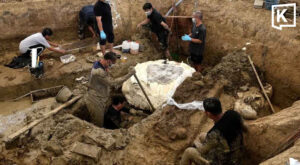
The latest phase of the excavation focuses on Skeletons 1–4, whose skulls remain in the ground beneath ancient bronze ornaments covering the cranium. Other skeletal parts, including the torso, arms and legs, were removed earlier.